
$4.00 · 8-page PDF · instant download
Secure checkout by Stripe. Instant download after payment. All sales are final once the guide is downloaded.
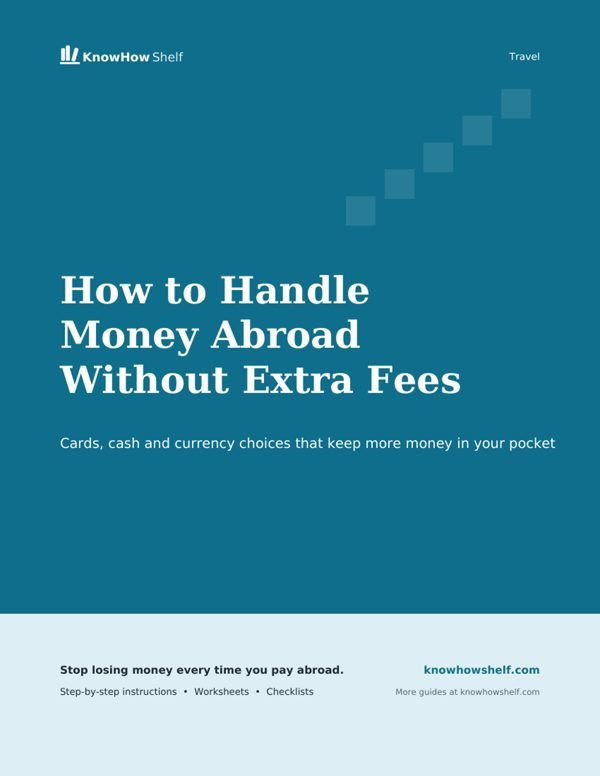
Cards, cash and currency choices that keep more money in your pocket
This guide is for anyone who has come home from a trip and found their bank statement higher than expected. You will learn where travel money fees hide, how to choose cards and cash methods that keep costs low, and the one question at the till that catches most people out. Fees and products vary by country and bank and change often, so check your own provider's current terms. General information, not professional advice.
Spending money abroad usually costs more than the price on the label because of several small charges stacked on top of each other. Individually they look minor. Over a two-week trip they can add up to a noticeable share of your spending money. The first step is knowing what each one is.
| Cost | What it is | How to reduce it |
|---|---|---|
| Foreign transaction fee | A percentage your card provider adds to every purchase made in a foreign currency. | Use a card that charges no foreign transaction fee. |
| Exchange rate markup | The gap between the mid-market rate and the rate you actually get. | Compare the rate you are offered with the mid-market rate. |
| Dynamic currency conversion | The merchant or ATM converts the price into your home currency, usually at a poor rate. | Always choose to pay in the local currency. |
| ATM operator fee | A charge set by the owner of the cash machine, shown on screen. | Use bank-owned ATMs and compare before confirming. |
| Your bank's cash fee | A fee from your own bank for overseas withdrawals, sometimes with a minimum charge. | Withdraw less often, in larger amounts, from a fee-free card. |
| Cash advance charges | Interest and fees for withdrawing cash on a credit card. | Avoid credit card cash withdrawals unless the terms say otherwise. |
| Airport exchange rates | Kiosks in airports and tourist areas often offer weaker rates. | Exchange only a small amount there, or none at all. |
The mid-market rate is the rate halfway between buying and selling a currency, the one you see in a quick currency search. No provider gives you exactly that rate for free, but the closer you get, the less you lose.
Many of these costs are not shown clearly at the moment you pay. A foreign transaction fee may appear as a separate line on your statement days later, or it may be folded into the converted amount. That is why it pays to understand your card's terms before you go, rather than trying to work out the cost at a busy till. Once you know which fees apply to which card, you can decide quickly and confidently each time you pay.
The single biggest saving usually comes from the card you carry. Many standard debit and credit cards charge a foreign transaction fee on every purchase. Cards marketed for travel, and some digital banks and multi-currency accounts, charge little or nothing. Product names and terms change, so compare current options in your country.
Get the rest: the full step-by-step guide plus a printable worksheet for $4.

$4

$4
$4

$4

$4

$4

$4

$4

$4

$4

$4

$4

$4

$4

$4

$4

$4

$4

$4