KnowHow Shelf
Home / Business & Side Hustles
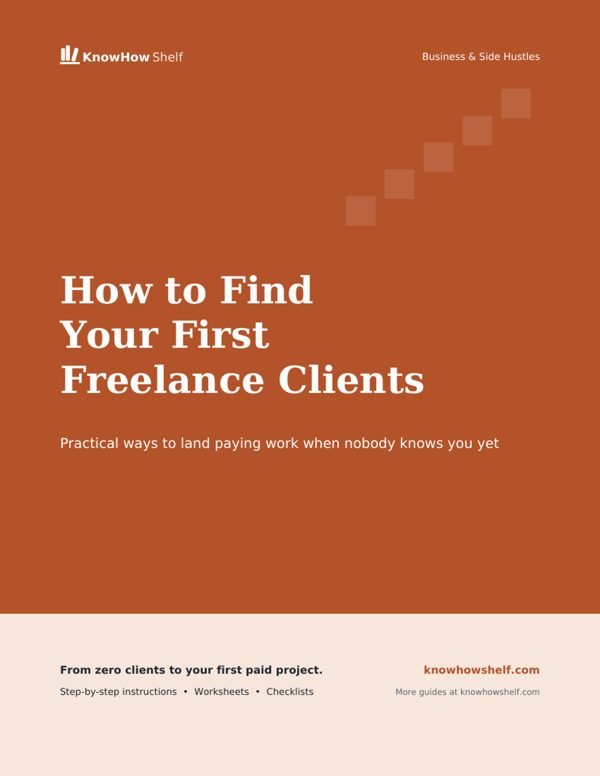
How to Find Your First Freelance Clients PDF guide cover

$4.00 · 7-page PDF · instant download

Secure checkout by Stripe. Instant download after payment. All sales are final once the guide is downloaded.

Business & Side Hustles

How to Find Your First Freelance Clients

Practical ways to land paying work when nobody knows you yet

What's inside the full guide

  1. Decide Exactly Who You Are Looking For
  2. Build Proof Before You Have Clients
  3. Start With Your Warm Network
  4. Reach Out to New Prospects Without Spamming
  5. Use Freelance Platforms and Job Boards Wisely
  6. Turn First Clients Into More Clients
  7. Keep a Weekly Client-Finding Routine
  8. First Clients Tracker (printable worksheet)

Free preview

This guide is for new freelancers who have a skill to sell but no clients yet. You will learn how to define who you are looking for, build simple proof of your work, reach out without feeling pushy, use platforms wisely and turn your first projects into referrals and repeat work.

Decide Exactly Who You Are Looking For

The hardest way to find clients is to look for anyone who might need your skill. The easiest way is to pick a specific type of client and go where they are. A narrow focus makes every other step simpler: you know where to look, what to say and what examples to show.

  1. List the industries you understand Think about past jobs, hobbies and communities you belong to. Knowing an industry's language and problems gives you a head start over generalists.
  2. Pick one client type to start For example: independent physiotherapy clinics, small online clothing shops or local estate agents. You can widen later.
  3. Name their problem Write down a problem your skill solves for that client, in their words. For example: our website does not bring in bookings, or we never have time to post on social media.
  4. Describe the result you offer Turn the problem into a clear outcome. For example: a simple booking page that makes it easy for new patients to book online.

This gives you a one-line pitch: I help [client type] with [problem] so they get [result]. It is not a slogan; it is a filter. Use it to decide which groups to join, which businesses to contact and which samples to create.

Focus is not forever: Choosing a niche does not stop you taking other work. It simply gives your outreach a clear target for the next few months. If it does not work, choose a different focus and try again.

Build Proof Before You Have Clients

Clients want evidence that you can do the job. When you have no paid work to show, create proof another way. The aim is a small portfolio of two to four pieces that look like the work your target client would buy.

  • Sample projects: create example work for an imaginary or real business in your niche, clearly labelled as a sample or concept.
  • Before and after: redesign a page, rewrite a product description or reorganise a spreadsheet and show both versions. Use public material or your own, and label it as a concept rather than client work.
  • Past job work: describe relevant results from previous employment, without sharing confidential details or files.
  • Small projects for people you know: a friend's shop, a local club or a charity may welcome help. Ask for a short testimonial afterwards.
  • Process write-ups: a short explanation of how you approach a problem shows thinking, not just output.

Put your samples somewhere easy to share: a simple portfolio page, a shared folder link or a PDF. Each piece should include a sentence on the problem, what you did and the result or intended result. Keep it short; a busy client will spend a minute or two looking.

Quality beats quantity here. Three strong, relevant pieces aimed at your chosen client type will persuade more people than a dozen mixed examples from unrelated fields. If a sample does not match the work you want to be hired for, leave it out. As paid projects arrive, replace concept pieces with real ones, keeping the best of each type.

Never pass off samples as client work: Label concept pieces honestly. Clients respect initiative, but they will not trust someone who exaggerates. Honest samples are still persuasive.

Get the rest: the full step-by-step guide plus a printable worksheet for $4.

More Business & Side Hustles guides

How to Start a Small Business From Scratch, Step by Step

$4

How to Write a Simple One-Page Business Plan

$4

How to Start Freelancing With No Experience

$4

How to Price Your Products or Services Without Underselling

$4

How to Open an Etsy Shop and Get Your First Sale

$4

How to Start a Side Hustle While Working Full Time

$4

How to Start a Business With Little or No Money

$4

How to Set Your Freelance Hourly Rate

$4

How to Create and Sell Digital Products Online

$4

How to Write and Send a Professional Invoice

$4

How to Get Customers for a Brand New Business

$4

How to Start a Business From Home

$4

How to Do Simple Bookkeeping for a Small Business

$4

How to Choose a Business Name That Works

$4

How to Use Instagram to Grow a Small Business

$4

How to Chase a Late Payment Without Losing the Client

$4

How to Sell Printables on Etsy

$4

How to Register a Business: What Beginners Need to Know

$4

How to Make Money Selling on eBay as a Beginner

$4