$4.00 · 7-page PDF · instant download
Secure checkout by Stripe. Instant download after payment. All sales are final once the guide is downloaded.
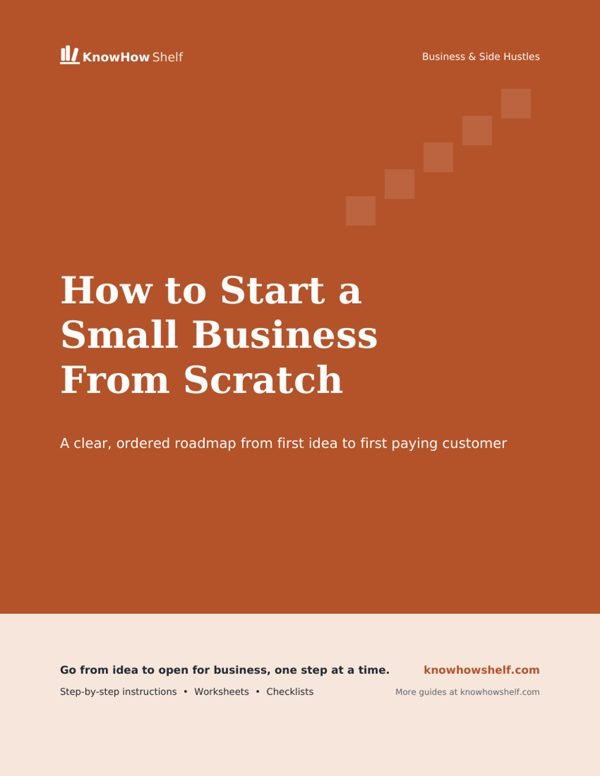
A clear, ordered roadmap from first idea to first paying customer
This guide is for anyone who has a business idea, or the wish to have one, and no clear sense of what to do first. It walks through the whole journey in a sensible order, from checking your idea to taking your first payment, so you can stop researching in circles and start making progress. Rules on registration, tax and licences differ by country and region, so treat this as general information, not professional advice, and check the official sources named along the way.
Most first businesses do not need a brilliant, original idea. They need a specific problem, a specific group of people who have it, and a way for you to solve it that those people will pay for. A dog walking service for busy office workers in your town is a better starting point than a vague plan to "do something with pets".
Good starting ideas often come from your own life. Think about skills people already ask you for help with, problems you have solved for yourself, jobs you have done for an employer that small businesses also need, or gaps you notice in your local area. Each of these gives you a head start, because you already understand the customer and the problem.
If you have several ideas, score each one honestly before you commit. You are looking for the overlap between what you can do, what people already spend money on, and what fits the time and cash you actually have.
| Question to ask | Why it matters |
|---|---|
| Do people already pay for this? | Existing spending proves demand. A total lack of competitors is often a warning, not an opportunity. |
| Can I reach these customers cheaply? | If you cannot name where your buyers gather, online or locally, marketing will be slow and expensive. |
| Can I start with what I have? | Ideas needing large stock, equipment or premises carry more risk for a first business. |
| Will I still want to do this in a year? | Enthusiasm fades. Pick something you can tolerate on a dull Tuesday. |
| Is there a clear profit per sale? | If the price barely covers costs, growth only multiplies your workload. |
The biggest early mistake is spending months building a product, website or brand before anyone has shown they will buy. A quick, cheap test saves you from that. The goal is not proof of a future empire, just evidence that real people will hand over real money.
Friends and family are kind but unreliable judges. Their encouragement is welcome; their purchases do not count as proof unless they are genuinely your target customer.
Get the rest: the full step-by-step guide plus a printable worksheet for $4.
$4
$4
$4
$4
$4

$4

$4

$4

$4
$4

$4

$4

$4

$4

$4

$4

$4
$4

$4