
$4.00 · 8-page PDF · instant download
Secure checkout by Stripe. Instant download after payment. All sales are final once the guide is downloaded.
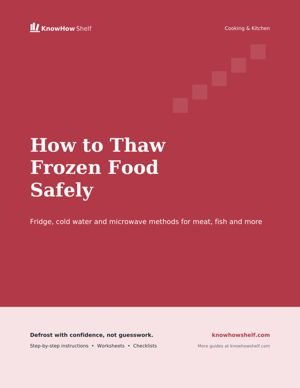
Stop freezer burn, soggy thaws and mystery bags
This guide is for anyone who has pulled a frosty, flavourless lump out of the freezer and wondered what went wrong. You will learn how freezing affects food, how to prepare, wrap and label it, which foods freeze well and which do not, and how to thaw and use it safely. Storage times and safety advice vary by country, so check your national food-safety agency for the official figures. General information, not professional advice.
Freezing does not kill most bacteria. It pauses them. At the standard home-freezer temperature of -18 C (0 F) or colder, bacteria cannot grow, which is why frozen food stays safe for a long time. When the food thaws, any bacteria present can become active again, so food that goes in the freezer should be fresh and handled hygienically.
What changes with time is quality, not safety. Two things cause most of the damage. The first is ice crystals: water in food expands as it freezes, and large crystals break cell walls, which is why some foods turn mushy when thawed. Fast freezing makes smaller crystals and less damage. The second is freezer burn: dry, greyish-white patches where air has reached the food's surface and moisture has evaporated. Freezer-burned food is safe to eat but tough and bland in those spots.
Good freezing starts before anything goes near the freezer. The quality of what comes out depends on the quality of what goes in, plus a few simple preparation steps.
For items that clump together, such as berries, sliced fruit, meatballs, dumplings or cookie dough balls, use open freezing. Spread them in a single layer on a lined tray, freeze until firm, then tip them into a bag. You can then take out exactly the number you need.
Get the rest: the full step-by-step guide plus a printable worksheet for $4.
$4
$4

$4
$4
$4

$4
$4

$4

$4
$4
$4

$4

$4
$4
$4

$4

$4
$4
$4