
$4.00 · 8-page PDF · instant download
Secure checkout by Stripe. Instant download after payment. All sales are final once the guide is downloaded.
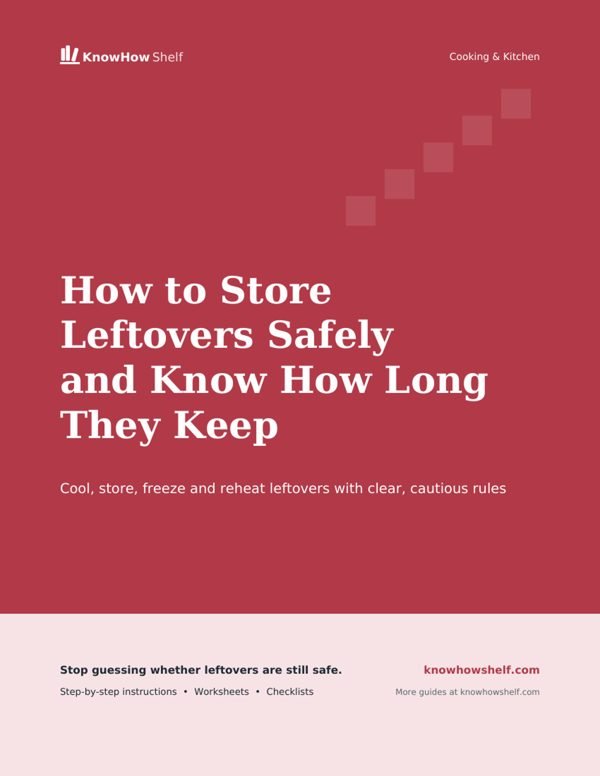
Cool, store, freeze and reheat leftovers with clear, cautious rules
This guide is for anyone who has stood at the open fridge wondering whether last Tuesday's curry is still safe. You will learn how to cool food quickly, store it at the right temperature, judge cautious keeping times for common leftovers, freeze and thaw safely, and reheat properly. Food-safety rules differ between countries and are updated over time, so treat the times here as cautious general guides and check your national food-safety agency for the official advice. General information, not professional advice.
Most food poisoning from leftovers is not caused by food that looks or smells bad. It is caused by bacteria that grow quietly while food sits at the wrong temperature, or that produce toxins which reheating does not destroy. That is why the nose test is not a safety test.
Bacteria multiply fastest in the range food-safety agencies often call the danger zone, roughly between 5 C and 60 C (about 40 F to 140 F). Exact figures vary slightly by country. Cold slows bacteria down, freezing stops them growing, and thorough cooking kills most of them. Leftover safety is mostly about keeping food out of the danger zone as much as possible.
People at higher risk from food poisoning, including pregnant people, young children, older adults and anyone with a weakened immune system, should be especially cautious and follow the stricter advice from their health service.
To find the official rules where you live, search for the name of your country plus "food safety leftovers" and look for a government food-safety agency or national health service website. Note its recommended fridge temperature and keeping times on the worksheet at the back of this guide.
Cooling is the step most people get wrong. A big pot of stew left on the hob overnight to cool spends hours in the danger zone. Many food-safety agencies advise getting cooked food into the fridge within about two hours, and within one hour in hot weather. Some advise even faster for certain foods, such as rice. Check your local guidance.
Get the rest: the full step-by-step guide plus a printable worksheet for $4.

$4
$4

$4

$4

$4
$4

$4

$4
$4
$4

$4

$4
$4
$4
$4

$4

$4
$4
$4