KnowHow Shelf
Home / Health & Fitness
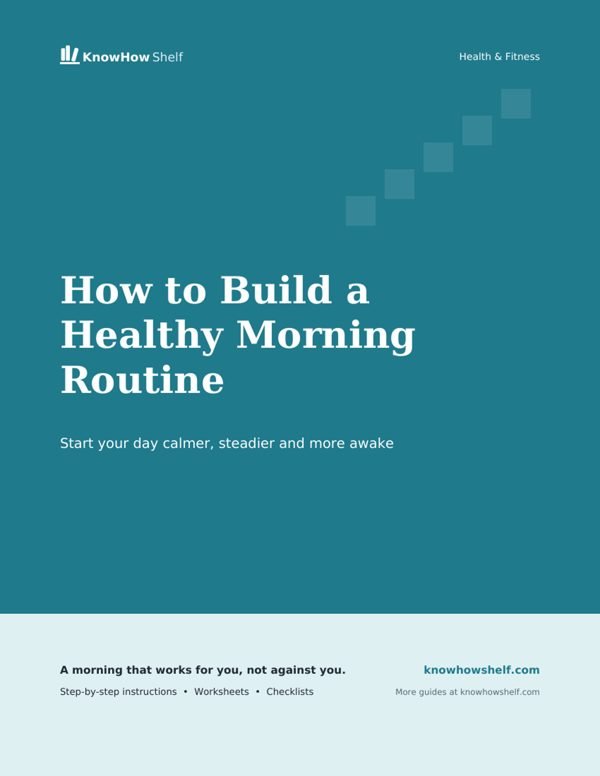
How to Build a Healthy Morning Routine PDF guide cover

$4.00 · 8-page PDF · instant download

Secure checkout by Stripe. Instant download after payment. All sales are final once the guide is downloaded.

Health & Fitness

How to Build a Healthy Morning Routine

Start your day calmer, steadier and more awake

What's inside the full guide

  1. What Makes a Morning Routine Healthy
  2. Set Up the Night Before
  3. The Core Building Blocks
  4. Design Your Own Routine
  5. Add Gentle Movement
  6. Protect Your Focus and Mood
  7. Keep It Going When Life Gets Busy
  8. My Morning Routine Plan (printable worksheet)

Free preview

This guide is for anyone whose mornings feel rushed, groggy or chaotic and who wants a simple, realistic routine that sets up a better day. You will learn what makes a morning routine healthy, how to design one around your real schedule, and how to keep it going when life gets busy. There are no 5am wake-up rules or hour-long rituals here, just practical building blocks you can mix and match. General information, not professional advice. If you have a health condition, check with your doctor before changing your exercise or eating habits.

What Makes a Morning Routine Healthy

A morning routine is simply a set of things you do in roughly the same order after waking. Everyone already has one, even if it is "snooze three times, check phone, rush out the door". The question is whether your current routine leaves you feeling ready for the day or already behind.

A healthy morning routine usually has three qualities. It is predictable, so you are not making lots of decisions while still half asleep. It is realistic, fitting the time you actually have rather than an ideal you will not keep. And it includes at least a little of the basics your body needs: light, water, movement and food, alongside a moment to get your head straight.

There is no single correct routine. A parent getting children to school, a shift worker and a student will each need something different. What matters is that yours supports you, and that you can repeat it most days without strain.

  • It does not need to be long. Fifteen well-used minutes can make more difference than an hour of rushing between tasks.
  • It does not need to start early. A routine that starts at 8am and suits your sleep is better than a 5am start that leaves you exhausted.
  • It does not need to be the same every day. Many people have a short weekday version and a longer, slower weekend version.
  • It should feel good. If a habit leaves you dreading the morning, it is the wrong habit for you right now.
The real secret: A good morning usually starts the night before. Going to bed at a sensible time and preparing a few things in advance does more for your morning than anything you do after the alarm.

Set Up the Night Before

Most morning stress comes from decisions and small tasks that pile up in a short window: what to wear, what to eat, where the keys are, what is on today. Moving some of those to the evening frees up your morning and lets you wake into a calmer space.

  • Check tomorrow's calendar so there are no surprises.
  • Lay out clothes, including shoes and anything for exercise.
  • Pack your bag, lunch or work items and leave them by the door.
  • Put keys, wallet, phone charger and travel pass in one fixed spot.
  • Fill a glass or bottle of water and leave it by your bed or in the kitchen.
  • Prepare breakfast ingredients, or make something ahead such as overnight oats.
  • Clear the kitchen counter so the morning starts in a tidy space.
  • Set your alarm for the time you genuinely intend to get up.

You do not need to do every item. Choose the two or three that would remove the biggest morning headaches. For many people that is clothes, bag and breakfast.

Aim for enough sleep to wake up reasonably refreshed. Needs differ from person to person, but going to bed and getting up at roughly the same times each day, including weekends, helps your body clock settle into a steady rhythm and makes waking easier over time.

Get the rest: the full step-by-step guide plus a printable worksheet for $4.
More Health & Fitness guides

How to Start Working Out as a Complete Beginner

$4

How to Fall Asleep Faster Naturally

$4

How to Start Running When You Have Never Run

$4

How to Improve Your Posture in Everyday Life

$4

How to Build an Exercise Habit That Actually Sticks

$4

How to Reduce Stress in Daily Life

$4

How to Create a Home Workout With No Equipment

$4

How to Drink More Water Every Day

$4

How to Fix Your Sleep Schedule

$4

How to Start a Daily Stretching Routine

$4

How to Get More Steps Into Your Day

$4

How to Get Motivated to Exercise When You Do Not Feel Like It

$4

How to Build Up to Your First Proper Push-Up

$4

How to Loosen Tight Hips From Sitting All Day

$4

How to Calm Down Quickly When You Feel Overwhelmed

$4

How to Plan Your First Week at the Gym

$4

How to Create a Bedtime Routine for Better Sleep

$4

How to Set Up Your Desk for Better Posture

$4

How to Build Core Strength as a Beginner

$4