
$4.00 · 7-page PDF · instant download
Secure checkout by Stripe. Instant download after payment. All sales are final once the guide is downloaded.
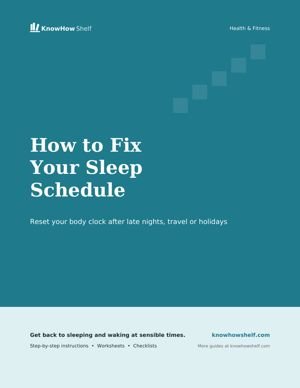
Simple daytime and bedtime habits that help your body switch off
This guide is for anyone who gets into bed tired but then lies awake, staring at the ceiling or scrolling their phone. You will learn why falling asleep can be hard, which daytime habits set you up for a better night, and a calm wind-down routine you can start tonight. If you have ongoing sleep problems, loud snoring, breathing pauses at night, or a health condition, talk to your doctor rather than relying on self-help alone. General information, not professional advice.
Falling asleep is not something you can force. It happens when two systems in your body line up. The first is sleep pressure: the longer you are awake, the more a sleepy signal builds up in your brain. The second is your body clock, a roughly 24-hour rhythm that makes you feel alert at some times and drowsy at others. When both point towards sleep at the same moment, you drift off easily.
Problems start when something gets in the way. A long afternoon nap can drain sleep pressure. Bright screens late at night can nudge your body clock later. And a busy, worried mind keeps your body in an alert state, which is the opposite of what you need. Most of the advice in this guide works by fixing one of those three things: building sleep pressure, steadying your body clock, or calming your mind.
One more thing is worth knowing early. Trying hard to fall asleep usually backfires. The more you watch the clock and worry about tomorrow, the more alert you become. The aim is not to make sleep happen, but to set up the conditions where it can arrive on its own.
What you do during the day matters as much as what you do at bedtime. These habits help your body clock know when night is coming and build up healthy tiredness.
Alcohol deserves a special mention. A drink in the evening can make you feel drowsy, but it tends to make sleep lighter and more broken later in the night. If you drink, notice whether your sleep is better on nights without it.
Heavy meals close to bedtime can also make it harder to settle, especially if they cause indigestion. Try to finish your main meal a few hours before bed. If you are hungry later, a small, light snack is usually fine.
Get the rest: the full step-by-step guide plus a printable worksheet for $4.
$4
$4
$4
$4
$4

$4
$4

$4
$4
$4
$4
$4
$4

$4
$4

$4
$4

$4
$4