

$4.00 · 8-page PDF · instant download
Secure checkout by Stripe. Instant download after payment. All sales are final once the guide is downloaded.
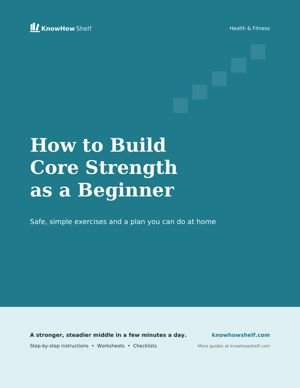
Build your own bodyweight routine in any room
This guide is for anyone who wants to exercise at home but has no gym, no weights and limited space. You will learn the handful of movement patterns that make up a balanced workout, how to choose exercises that suit your level, how to put them together into a routine, and how to keep making progress without buying anything. General information, not professional advice. If you have a health condition, an injury, are pregnant or have been inactive for a long time, check with your doctor before starting a new exercise routine.
Your own body is a surprisingly effective piece of equipment. By changing angles, speed, range of motion and the number of repetitions, you can make simple movements easier or much harder. That means the same small set of exercises can serve a complete beginner and someone with years of training.
Home workouts also remove many of the usual barriers. There is no travel time, no membership, no waiting for machines and no audience. You can train in short pockets of time, in clothes you already own, at whatever hour suits you.
Bodyweight training also builds skills that carry straight into daily life. Squatting down to a chair, pushing yourself up from the floor, carrying shopping and climbing stairs all rely on the same patterns you will practise here. Getting stronger in these movements tends to make everyday tasks feel easier.
Rather than collecting random exercises, think in terms of movement patterns. A balanced routine includes at least one exercise from each of these groups. That way you work the whole body and avoid overloading one area.
Covering every pattern also helps balance. Many people naturally favour pushing movements and neglect the upper back and the back of the legs, which can leave posture feeling rounded and hips feeling tight. Giving each pattern equal attention keeps things even.
| Pattern | What it trains | Example exercises |
|---|---|---|
| Squat | Thighs, hips, glutes | Chair sit-to-stand, bodyweight squat, split squat |
| Hinge | Back of legs, glutes, lower back | Glute bridge, good morning, single-leg bridge |
| Push | Chest, shoulders, triceps | Wall push-up, incline push-up on a counter, floor push-up |
| Pull and back | Upper back, posture muscles | Prone Y-T raises, towel rows against a door frame, superman hold |
| Core | Trunk stability | Dead bug, plank, side plank, bird dog |
Some people add a sixth slot for cardio, such as marching on the spot, step-ups, jumping jacks or low-impact boxing punches. These raise your heart rate and can be slotted between strength exercises or done as a short finisher.
Get the rest: the full step-by-step guide plus a printable worksheet for $4.
$4
$4
$4
$4
$4
$4
$4

$4
$4
$4
$4
$4
$4

$4
$4

$4
$4

$4
$4