
$4.00 · 8-page PDF · instant download
Secure checkout by Stripe. Instant download after payment. All sales are final once the guide is downloaded.
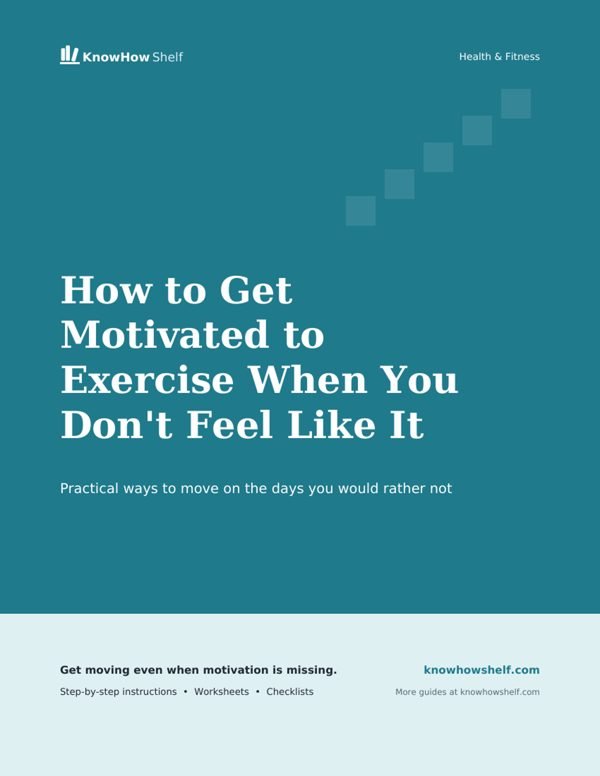
Practical ways to move on the days you would rather not
This guide is for anyone who means to exercise but keeps finding reasons not to, or who used to be active and has lost the spark. You will learn why motivation comes and goes, how to get started on low-energy days, how to make exercise easier to begin and more rewarding to finish, and how to bounce back after a break. General information, not professional advice. If you have a health condition, have been inactive for a long time, or feel persistently low or exhausted, speak to a doctor before starting or changing exercise.
Most people think of motivation as something you either have or lack. In reality, it rises and falls constantly. It is affected by sleep, stress, weather, mood, workload and dozens of other things. Even people who exercise regularly have plenty of days when they do not feel like it.
The key insight is that action often comes before motivation, not after it. Waiting to feel motivated before you start can mean waiting a long time. Starting, even in a tiny way, often creates the motivation to continue. Many people notice that the hardest part of a workout is the first five minutes, or simply getting their shoes on.
Rather than relying on motivation, the most consistent exercisers rely on systems: routines, plans and environments that make exercise the easy default. This guide helps you build those systems, so that motivation becomes a bonus rather than a requirement.
It also helps to separate motivation from discipline and habit. Motivation is the wish to do something. Discipline is choosing to do it anyway. Habit is when the choice barely feels like a choice at all, because it is simply what you do at that time. The aim over the coming weeks is to move exercise from the first category towards the third.
"I do not feel like it" usually hides a more specific reason. Identifying it helps you choose the right fix. Think about the last few times you skipped exercise and see which of these fit.
| Barrier | What it sounds like | Try this |
|---|---|---|
| Tiredness | "I am too tired today." | Do a short, gentle version. Light movement can lift energy. Review your sleep habits. |
| Time | "I have no time." | Schedule short sessions; ten minutes counts. Exercise first thing before the day fills up. |
| Boredom | "It is so dull." | Change the activity, add music or podcasts, or exercise with someone. |
| Too hard | "I hate how it feels." | Lower the intensity. Exercise does not have to be exhausting to be worthwhile. |
| Self-consciousness | "I feel awkward." | Start at home or in quiet places, wear clothes you feel good in, or try a beginner class. |
| Low confidence | "I do not know what to do." | Follow a simple plan or video, or book a session with a qualified instructor. |
| Friction | "It is such a hassle." | Prepare in advance so getting started takes seconds, not minutes. |
| Unclear reason | "What is the point?" | Reconnect with what matters to you about being active. |
Most people have one or two main barriers. Focus on those first. Solving the real problem is far more effective than trying to force yourself through it with willpower.
Get the rest: the full step-by-step guide plus a printable worksheet for $4.
$4
$4
$4
$4
$4
$4

$4
$4

$4
$4
$4
$4
$4

$4
$4

$4
$4

$4
$4