KnowHow Shelf
Home / Money & Personal Finance
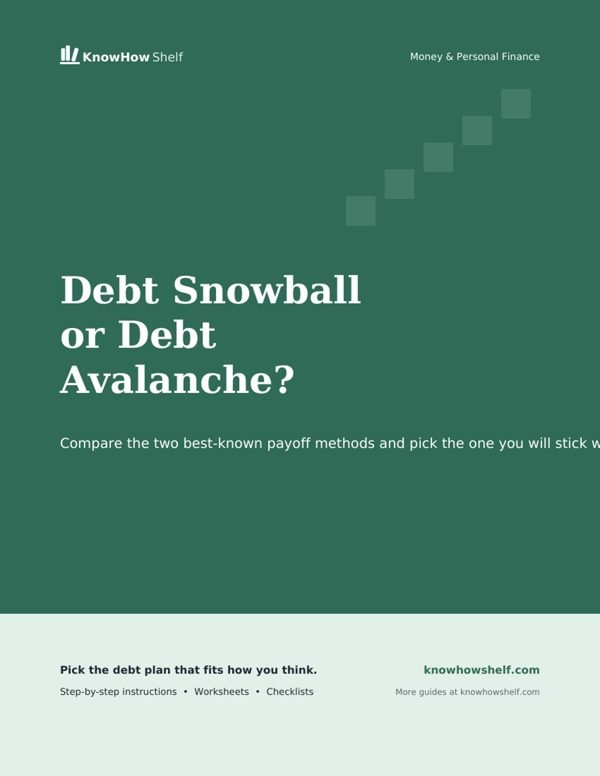
How to Choose Between the Debt Snowball and Debt Avalanche PDF guide cover

$4.00 · 8-page PDF · instant download

Secure checkout by Stripe. Instant download after payment. All sales are final once the guide is downloaded.

Money & Personal Finance

How to Choose Between the Debt Snowball and Debt Avalanche

Compare the two best-known payoff methods and pick the one you will stick with

What's inside the full guide

  1. What the Two Methods Have in Common
  2. How the Debt Snowball Works
  3. How the Debt Avalanche Works
  4. Compare Them Side by Side
  5. Run the Numbers for Your Own Debts
  6. Special Cases to Think About
  7. How to Decide, Start and Stay on Track
  8. Debt Payoff Planner (printable worksheet)

Free preview

This guide is for anyone with two or more debts who wants a clear plan to pay them off, but is unsure which order to tackle them in. You will learn exactly how the debt snowball and debt avalanche methods work, how to compare them using your own numbers, and how to choose, start and stick with the one that suits you. General information, not professional advice.

What the Two Methods Have in Common

The debt snowball and the debt avalanche are both ways of deciding which debt to attack first. They share the same basic structure, and both work far better than paying a little extra on everything at random.

  • You keep paying at least the minimum on every debt, every month, so nothing falls into arrears.
  • You find an extra amount each month to put towards debt, however small.
  • All of that extra goes to one target debt at a time.
  • When the target debt is paid off, you add its old minimum payment to your extra amount and move on to the next target.
  • Your payment towards the current target grows each time a debt is cleared, which is why both methods speed up over time.

The only real difference is the order. The snowball sorts debts by balance, smallest first. The avalanche sorts debts by interest rate, highest first. That one choice changes how the plan feels and how much it costs.

Keep up the minimums: Missing minimum payments can lead to fees, higher interest and damage to your credit record. Whichever method you choose, the minimums come first.

How the Debt Snowball Works

With the snowball, you list your debts from the smallest balance to the largest, ignoring interest rates. You pay minimums on everything and throw every spare amount at the smallest balance. Once it is gone, you roll that payment into the next smallest, and so on.

  1. List debts by balance Write down every debt from the smallest balance to the largest.
  2. Pay all minimums Set up minimum payments on every debt so none are missed.
  3. Attack the smallest Put all your extra money towards the smallest balance until it reaches zero.
  4. Roll the payment over Add the cleared debt's minimum to your extra amount and target the next smallest.
  5. Repeat until done Keep rolling payments forward until every debt is paid.

The big strength of the snowball is motivation. You see a debt disappear quickly, often in the first few months, and that early win can make it much easier to keep going. Fewer debts also means fewer bills to manage and fewer chances to miss a payment.

The downside is cost. If your largest debts also carry the highest interest, they sit there growing while you clear the small ones, so you will usually pay more interest overall and may take a little longer to finish.

Get the rest: the full step-by-step guide plus a printable worksheet for $4.
More Money & Personal Finance guides

How to Make a Budget That Actually Works

$4

How to Pay Off Debt Fast on Any Income

$4

How to Improve Your Credit Score Step by Step

$4

How to Build an Emergency Fund From Zero

$4

How to Save Money When You Live Paycheck to Paycheck

$4

How to Stop Overspending and Take Back Control

$4

How to Use the 50/30/20 Rule for Your Budget

$4

How to Start Zero-Based Budgeting

$4

How to Build Credit From Scratch

$4

How to Do a No-Spend Challenge and Stick With It

$4

How to Set Up Sinking Funds for Irregular Expenses

$4

How to Save Money on Groceries Without Coupons

$4

How to Start Investing With Little Money

$4

How to Use the Envelope Budgeting System

$4

How to Track Your Spending for 30 Days

$4

How to Get Out of Credit Card Debt

$4

How to Read Your Credit Report and Fix Errors

$4

How to Budget With an Irregular Income

$4

How to Save for a House Deposit

$4