
$4.00 · 8-page PDF · instant download
Secure checkout by Stripe. Instant download after payment. All sales are final once the guide is downloaded.
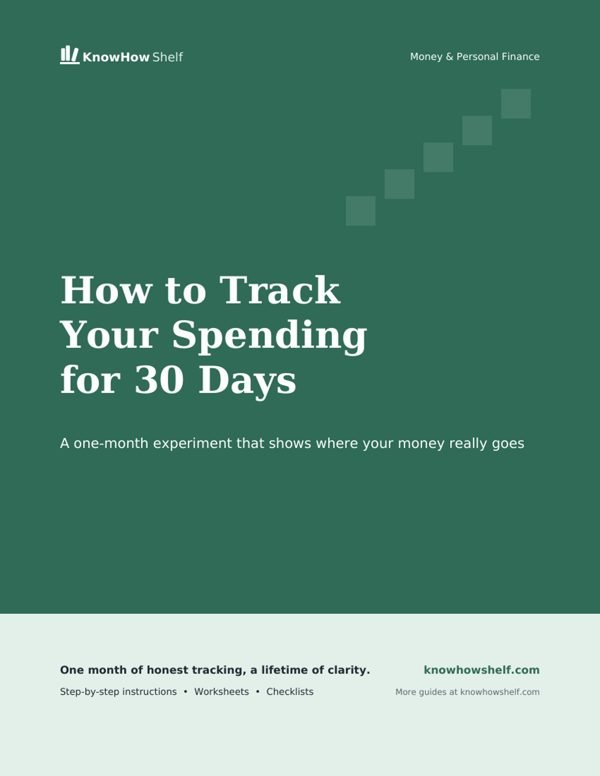
A one-month experiment that shows where your money really goes
This guide is for anyone who earns a reasonable income but still wonders where it all went by the end of the month. Over 30 days you will record every outgoing, sort it into simple categories, and finish with a clear picture of your real spending, plus three or four changes worth making. No budgeting experience is needed. General information, not professional advice.
Most people underestimate their spending, often by a wide margin. It is not carelessness; it is how memory works. Large, regular bills stick in the mind, while small, frequent purchases blur together. A coffee here, a delivery fee there and an app subscription you forgot about can add up to a surprising monthly sum without ever feeling significant.
Tracking for a full month solves this because it captures a complete cycle. Most bills, paydays and routines repeat monthly, so 30 days gives you a representative sample. It is also short enough to feel achievable. You are not committing to tracking forever, only to a focused experiment with a clear end date.
The key rule for the month is to observe, not judge. Try to spend normally. If you change everything on day one, you will learn what a strict month looks like, not what your real life costs. The changes come afterwards, once you have the evidence.
The best method is the one you will keep up for 30 days. Think honestly about your habits. If you always have your phone, a notes app may be easiest. If you like pen and paper, a small notebook in your bag works well. If you mostly pay by card, your banking app may do much of the work for you.
| Method | Best for | Drawbacks |
|---|---|---|
| Notebook | People who like writing things down and want simplicity | Easy to forget at home; needs adding up by hand |
| Phone notes app | Quick entries on the go | Totals must be worked out separately |
| Spreadsheet | People comfortable with formulas who want charts | Harder to update while out; needs regular sessions |
| Banking app categories | Card and contactless spenders | Categories can be wrong; misses cash spending |
| Budgeting app | Combining several accounts automatically | May charge a fee; check data permissions |
| Receipt envelope | Cash users who prefer to sort weekly | Some purchases have no receipt |
Many people combine two methods: a banking app or statement for card spending, plus a quick note for cash. Whatever you pick, decide it before day one and set it up so it takes seconds to use.
If you rely on automatic categories from a bank or app, check them during your weekly review. Automatic sorting often files a supermarket purchase that included clothing under groceries, or a petrol station snack under transport. A few corrections each week keep your final totals trustworthy.
Get the rest: the full step-by-step guide plus a printable worksheet for $4.
$4
$4

$4

$4
$4
$4
$4
$4

$4

$4
$4
$4
$4

$4
$4
$4

$4
$4

$4