KnowHow Shelf
Home / Money & Personal Finance
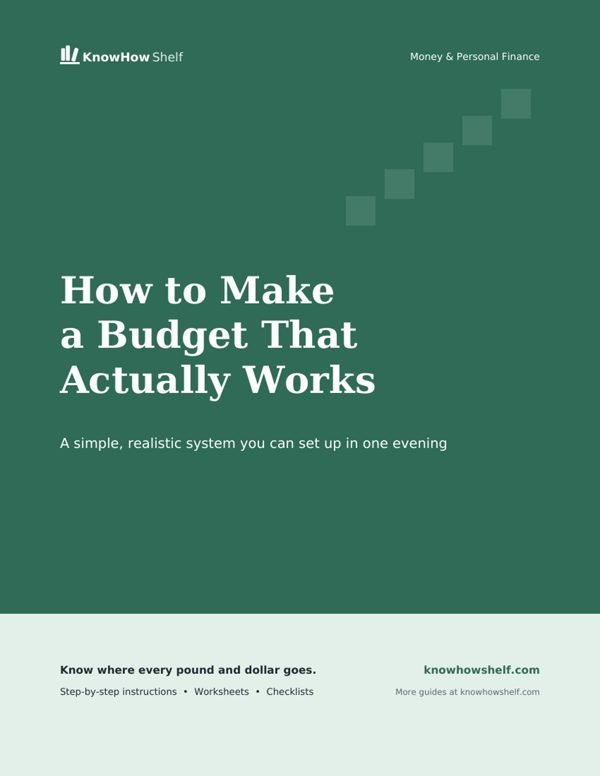
How to Make a Budget That Actually Works PDF guide cover

$4.00 · 8-page PDF · instant download

Secure checkout by Stripe. Instant download after payment. All sales are final once the guide is downloaded.

Money & Personal Finance

How to Make a Budget That Actually Works

A simple, realistic system you can set up in one evening

What's inside the full guide

  1. Why Most Budgets Fail (and How Yours Will Not)
  2. Step One: Find Your Real Numbers
  3. Step Two: Choose a Budgeting Method
  4. Step Three: Build Your First Monthly Plan
  5. Step Four: Make the Budget Run Itself
  6. Step Five: Track, Review and Adjust
  7. Troubleshooting Common Problems
  8. My Monthly Budget Planner (printable worksheet)

Free preview

This guide is for anyone who has tried budgeting before and given up, or who has never made a budget at all and does not know where to start. You will learn how to find your real income and spending, choose a budgeting method that suits your life, build your first monthly plan, and keep it going without spending hours on it. By the end you will have a working budget on paper and a short routine to keep it alive. General information, not professional advice.

Why Most Budgets Fail (and How Yours Will Not)

A budget is simply a plan for your money before the month begins. It is not a punishment, and it is not a record of everything you did wrong last month. Most budgets fail for a handful of predictable reasons, and once you know them you can design around them from the start.

  • They are built on guesses. People write down what they think they spend, not what they actually spend, so the plan is wrong from day one.
  • They are too strict. A budget with no room for fun or small treats breaks within a fortnight.
  • They forget irregular costs. Car repairs, birthdays and annual subscriptions arrive and wreck the month.
  • They are never reviewed. A budget written once and never looked at again is just a wish list.
  • They are too complicated. Forty categories and a colour-coded spreadsheet are hard to keep up when life gets busy.

The approach in this guide fixes each of these problems. You will start with real numbers, leave room for enjoyment, plan for irregular costs, keep the number of categories small, and check in for a few minutes each week.

Step One: Find Your Real Numbers

Before you can plan, you need an honest picture of what comes in and what goes out. Set aside about an hour and gather your last two or three months of bank statements, credit card statements and any receipts for cash spending. Most banking apps let you download or scroll through past transactions.

  1. Work out your take-home income Use the amount that actually lands in your account after tax and deductions, not your salary before tax. If your pay varies, use the lowest month from the last three as your starting figure.
  2. List your fixed bills These are costs that are roughly the same each month: rent or mortgage, utilities, phone, insurance, loan repayments, subscriptions and childcare. Write down the amount and the date each one leaves your account.
  3. Total your variable spending Go through your statements and add up groceries, fuel or transport, eating out, shopping, entertainment and anything else that changes month to month. Average the months you have.
  4. Find the irregular costs Look back over the whole year for things that do not happen monthly: car tax, insurance renewals, holidays, gifts, school costs, annual memberships. Add them up and divide by twelve.
  5. Compare the totals Subtract all spending from your take-home income. The result tells you whether you are currently living within your means, and by how much.

If you use cash for some purchases, keep a note on your phone for one or two weeks and write down every cash payment. Cash spending is the part people most often underestimate. The same goes for small card payments such as coffees, snacks and app purchases: each one looks tiny, but together they can add up to one of your largest categories. Group them together so you can see the real total.

Do not judge yet: This first pass is about facts, not feelings. If the numbers are uncomfortable, that is useful information, not a failure. Everyone who budgets successfully started by looking at numbers they did not like.

Get the rest: the full step-by-step guide plus a printable worksheet for $4.
More Money & Personal Finance guides

How to Pay Off Debt Fast on Any Income

$4

How to Improve Your Credit Score Step by Step

$4

How to Build an Emergency Fund From Zero

$4

How to Save Money When You Live Paycheck to Paycheck

$4

How to Stop Overspending and Take Back Control

$4

How to Use the 50/30/20 Rule for Your Budget

$4

How to Start Zero-Based Budgeting

$4

How to Choose Between the Debt Snowball and Debt Avalanche

$4

How to Build Credit From Scratch

$4

How to Do a No-Spend Challenge and Stick With It

$4

How to Set Up Sinking Funds for Irregular Expenses

$4

How to Save Money on Groceries Without Coupons

$4

How to Start Investing With Little Money

$4

How to Use the Envelope Budgeting System

$4

How to Track Your Spending for 30 Days

$4

How to Get Out of Credit Card Debt

$4

How to Read Your Credit Report and Fix Errors

$4

How to Budget With an Irregular Income

$4

How to Save for a House Deposit

$4