
$4.00 · 8-page PDF · instant download
Secure checkout by Stripe. Instant download after payment. All sales are final once the guide is downloaded.
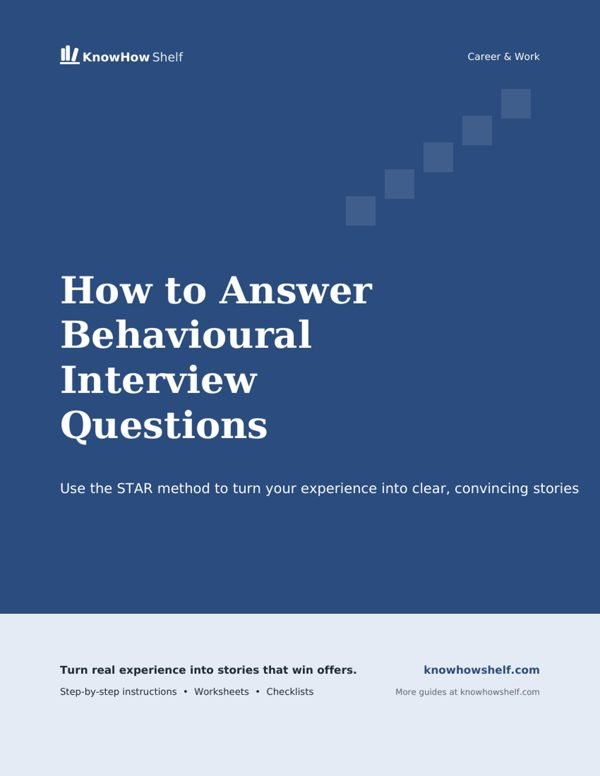
Use the STAR method to turn your experience into clear, convincing stories
This guide is for anyone facing interview questions that begin "Tell me about a time when..." and wants a reliable way to answer them. You will learn what behavioural questions test, how the STAR method works, how to build a bank of stories from your own experience, and how to adapt them to the most common questions. By the end you will have several prepared examples you can use with confidence.
Behavioural questions ask you to describe how you handled real situations in the past. The idea behind them is simple: how you behaved before is often a useful guide to how you will behave again. Instead of asking "Are you good at handling conflict?", which invites a quick yes, the interviewer asks "Tell me about a time you disagreed with a colleague", which requires evidence.
They are common in many kinds of interview, from graduate schemes to senior roles and from public sector panels to private companies. Some organisations base their whole interview around them, sometimes calling it a competency-based interview, with each question linked to a skill listed in the job description.
You can usually recognise them by the opening words:
The interviewer is listening for three things: whether your example is relevant to the skill they are testing, whether you clearly explain what you personally did, and whether there was a meaningful outcome. A structured answer makes all three easy for them to find.
STAR is a widely used structure for answering behavioural questions. It stands for Situation, Task, Action and Result. Following it keeps your answer focused and stops you from rambling or leaving out the most important parts.
| Part | What it covers | Rough share of answer |
|---|---|---|
| Situation | The background: where you were, what was happening, why it mattered. | About 15 percent |
| Task | Your specific responsibility or the challenge you faced. | About 10 percent |
| Action | The steps you personally took, and why you chose them. | About 55 percent |
| Result | What happened as a result, and what you learned. | About 20 percent |
The most common mistake is spending too long on the situation and too little on the action. The interviewer does not need every detail of the background. They need enough context to understand the story, and then a clear picture of what you did. The action is where you show your skills, so it should be the biggest part.
A good STAR answer usually takes between one and a half and three minutes to say. Shorter answers often lack detail; much longer ones lose the listener.
Get the rest: the full step-by-step guide plus a printable worksheet for $4.
$4
$4
$4

$4

$4

$4

$4

$4

$4

$4
$4

$4
$4

$4

$4

$4

$4

$4

$4