
$4.00 · 8-page PDF · instant download
Secure checkout by Stripe. Instant download after payment. All sales are final once the guide is downloaded.
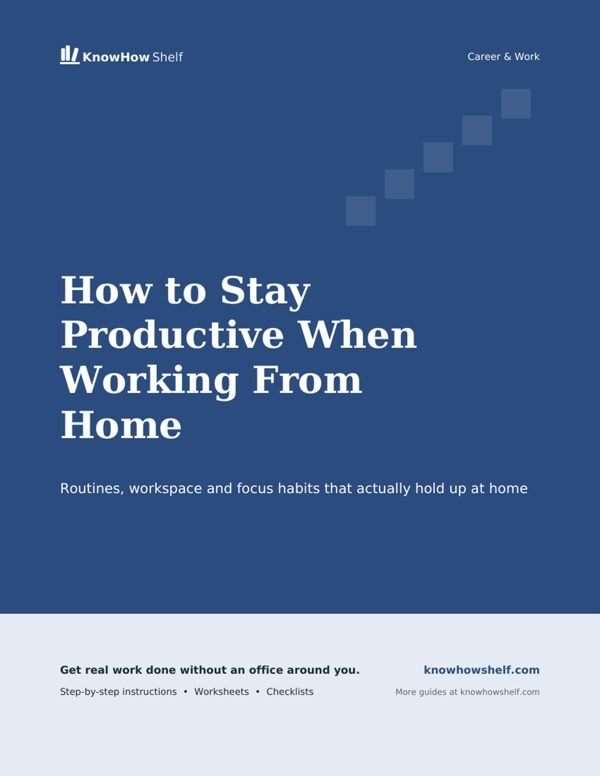
Routines, workspace and focus habits that actually hold up at home
This guide is for anyone who works from home some or all of the time and finds their focus slipping, their days blurring, or their evenings disappearing into work. You will learn how to set up a workspace that works, build a daily routine, plan your work so the important things get done, guard against distraction, communicate well with a remote team and switch off at the end of the day. Nothing here needs special equipment or apps.
Working from home removes the commute and many office interruptions, but it also removes the structure that quietly kept you on track. In an office, the building tells you when work starts, colleagues nearby nudge you to stay on task, and leaving the building tells you the day is over. At home, all of that becomes your job.
Most productivity problems at home fall into a few predictable patterns. Recognising which ones affect you tells you which parts of this guide to focus on first.
| Problem | What it looks like | Main fix in this guide |
|---|---|---|
| Slow starts | First real work begins mid-morning | Start-of-day routine |
| Constant distraction | Phone, chores, household interruptions | Workspace and focus blocks |
| Busy but unproductive | Lots of email, little meaningful progress | Daily planning |
| Feeling isolated | Lonely, unsure if your work is noticed | Communication habits |
| Never switching off | Checking messages late at night | Shutdown routine and boundaries |
Your brain links places with activities. If you work on the sofa where you also watch films, both work and rest suffer. The goal is a spot that means 'work' and nothing else, even if it is small.
Many employers offer help with home equipment or have home-working policies, so ask before buying. Some places also have rules or allowances about home-working costs and tax relief that vary by country; your national tax authority's website is the place to check.
If you live with others, agree simple signals. A closed door, headphones on, or a note on the door can mean 'in a meeting' or 'deep work'. Share your rough schedule so people know when you are free. With children at home, plan your most demanding work for the hours when they are at school, asleep or looked after.
Get the rest: the full step-by-step guide plus a printable worksheet for $4.

$4

$4
$4

$4

$4

$4

$4

$4

$4

$4

$4

$4

$4
$4

$4

$4

$4

$4

$4