
$4.00 · 8-page PDF · instant download
Secure checkout by Stripe. Instant download after payment. All sales are final once the guide is downloaded.
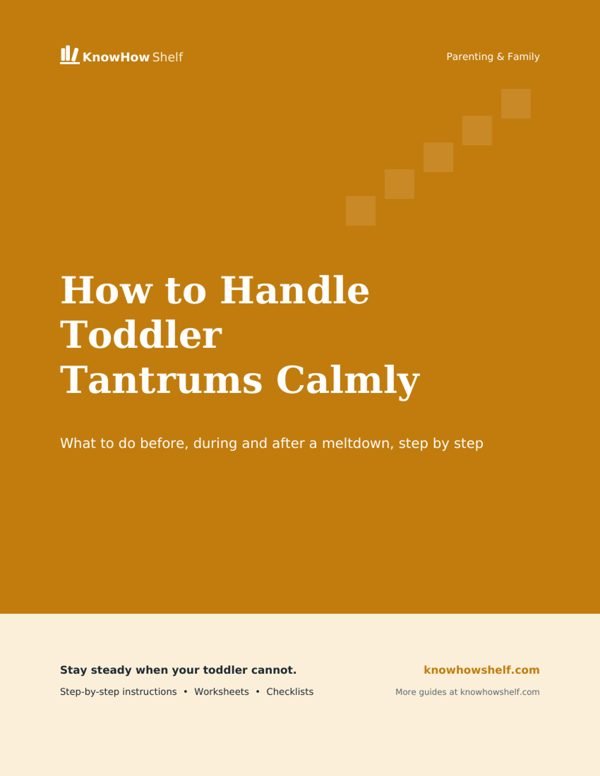
What to do before, during and after a meltdown, step by step
This guide is for parents and carers of toddlers whose days are punctuated by screaming, flopping to the floor and meltdowns over the wrong colour cup. You will learn why tantrums happen, how to prevent many of them, exactly what to do in the moment, how to handle public meltdowns, and how to reconnect afterwards. General information, not professional advice: if you are worried about your child's behaviour, development or safety, talk to your doctor or health visitor.
Tantrums are a normal part of early childhood. They are most common in the toddler and pre-school years, when children have big feelings, strong wishes and very limited ways to express or control them. The part of the brain that manages emotions and impulses is still developing, so a toddler who is disappointed or frustrated can quickly be overwhelmed.
A tantrum is not a sign of bad parenting or a 'bad' child. It is usually a sign that a feeling has become too big to manage. Your job is not to stop every tantrum, which is impossible, but to keep everyone safe, stay calm, and help your child gradually learn to handle feelings better.
You cannot prevent every tantrum, but you can greatly reduce how often they happen. Most prevention is about meeting basic needs and making the day more predictable.
Choices are especially powerful. A toddler who must put on shoes may still fight, but a toddler who can choose which shoes, or whether to hop or march to the door, often goes along with it. Offer two acceptable options, never a choice you cannot accept.
Get the rest: the full step-by-step guide plus a printable worksheet for $4.
$4
$4
$4
$4

$4
$4
$4
$4
$4

$4

$4
$4

$4
$4
$4

$4
$4
$4

$4