KnowHow Shelf
Home / Parenting & Family
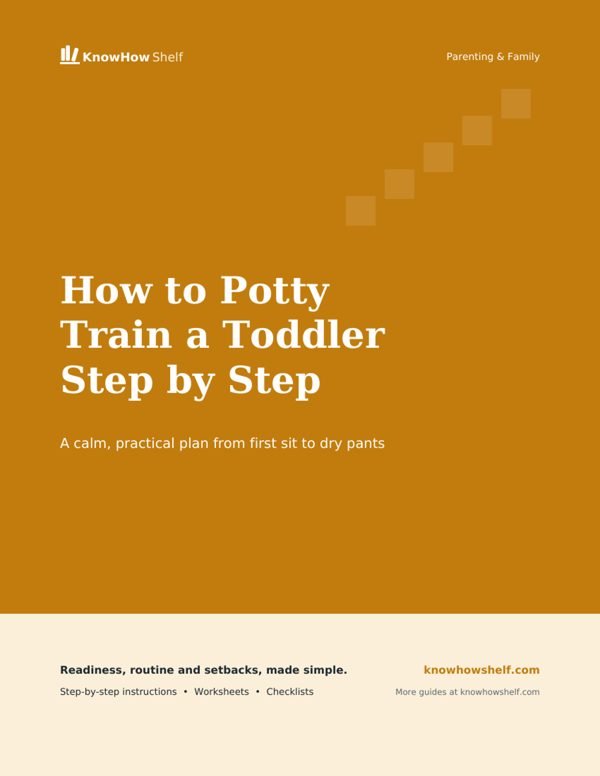
How to Potty Train a Toddler Step by Step PDF guide cover

$4.00 · 7-page PDF · instant download

Secure checkout by Stripe. Instant download after payment. All sales are final once the guide is downloaded.

Parenting & Family

How to Potty Train a Toddler Step by Step

A calm, practical plan from first sit to dry pants

What's inside the full guide

  1. Check readiness before you start
  2. Prepare in the week before
  3. The first three days
  4. Handling accidents without a battle
  5. Poo refusal, fear and holding on
  6. Going out, naps, nights and setbacks
  7. Potty Training Planner and Log (printable worksheet)

Free preview

This guide is for parents and carers who are about to start potty training, or who started and got stuck. You will learn how to tell whether your child is ready, how to prepare in the week before, what to do on the first days, and how to handle accidents, refusals and setbacks without a battle. General information, not professional advice: if you have any concern about your child's health, development, pain, constipation or toileting, talk to your doctor or health visitor.

Check readiness before you start

The single biggest factor in how smoothly potty training goes is timing. Starting before a child is ready usually means more accidents, more frustration and a longer process overall. There is no single correct age. Many children show readiness somewhere between about 18 months and 3 years, but the range is wide and it is normal for a child to be earlier or later than a sibling or a friend.

Rather than watching the calendar, watch your child. Look for a cluster of signs over a couple of weeks, not just one good day.

  • Stays dry for an hour or two at a time, or wakes dry from some naps
  • Shows they know they are weeing or pooing (pauses, hides, goes quiet, tells you)
  • Dislikes being in a wet or dirty nappy and asks to be changed
  • Can follow a simple two-step instruction, such as 'get your book and bring it here'
  • Can pull trousers up and down with a little help
  • Can sit still for a few minutes with a book or toy
  • Shows interest in the toilet, or in copying older children or adults
  • Has words or signs for wee and poo, even if they are made up
Not yet?: If you only tick two or three boxes, wait a few weeks and keep talking positively about the toilet. Pushing early rarely saves time. If your child is well past the usual age range and showing few signs, mention it at your next health check rather than worrying alone.

Also check your own readiness. Avoid starting during a house move, the arrival of a new baby, a change of childcare, a family illness or a holiday. Choose a stretch of at least a week or two when life is fairly predictable and you can stay home or close to home for the first few days.

Prepare in the week before

A little groundwork makes the first day feel familiar rather than strange. Spend the week before getting your child used to the idea and getting your home set up.

  1. Choose potty or toilet seat A floor potty is easier for small legs and can move between rooms. A child seat on the main toilet avoids a later switch but needs a sturdy step. Some families use both.
  2. Let your child explore it Put the potty somewhere visible. Let them sit on it fully clothed, put a teddy on it, and decorate it with a sticker if they like. The goal is curiosity, not performance.
  3. Teach the words Decide on the words your family will use and use them consistently, including at nursery or with grandparents.
  4. Model it If you are comfortable, let your child see family members use the toilet and wash their hands. Narrate simply: 'I need a wee, so I sit on the toilet.'
  5. Read and play Picture books about using the potty and pretend play with dolls help children rehearse the steps in a low-pressure way.
  6. Stock up Get plenty of easy-on, easy-off trousers, at least 8 to 10 pairs of pants, cleaning spray, old towels, and a small bag for wet clothes when you go out.

Tell anyone else who cares for your child when you plan to start, what words you use, and how you will respond to accidents. Consistency between adults matters more than which exact method you choose.

Get the rest: the full step-by-step guide plus a printable worksheet for $4.
More Parenting & Family guides

How to Build a Bedtime Routine Your Child Will Follow

$4

How to Set Screen Time Limits Kids Actually Follow

$4

How to Stop Siblings Fighting All the Time

$4

How to Get Kids to Do Chores Without Nagging

$4

How to Make a Family Budget That Works

$4

How to Start Caring for an Ageing Parent

$4

How to Create a Morning Routine for Kids That Ends the Rush

$4

How to Help Your Child With Homework Without Doing It for Them

$4

How to Get a Toddler to Stay in Their Own Bed

$4

How to Handle Toddler Tantrums Calmly

$4

How to Make a Chore Chart by Age

$4

How to Talk to Your Parents About Moving to Assisted Living

$4

How to Write a Family Media Plan

$4

How to Decide When Your Child Is Ready for a Phone

$4

How to Night Train a Child Who Is Dry by Day

$4

How to Plan a Child's Birthday Party on a Budget

$4

How to Get Your Child to Do Homework Without a Fight

$4

How to Discipline Without Yelling

$4

How to Set Up an Allowance System That Teaches Money

$4