
$4.00 · 7-page PDF · instant download
Secure checkout by Stripe. Instant download after payment. All sales are final once the guide is downloaded.
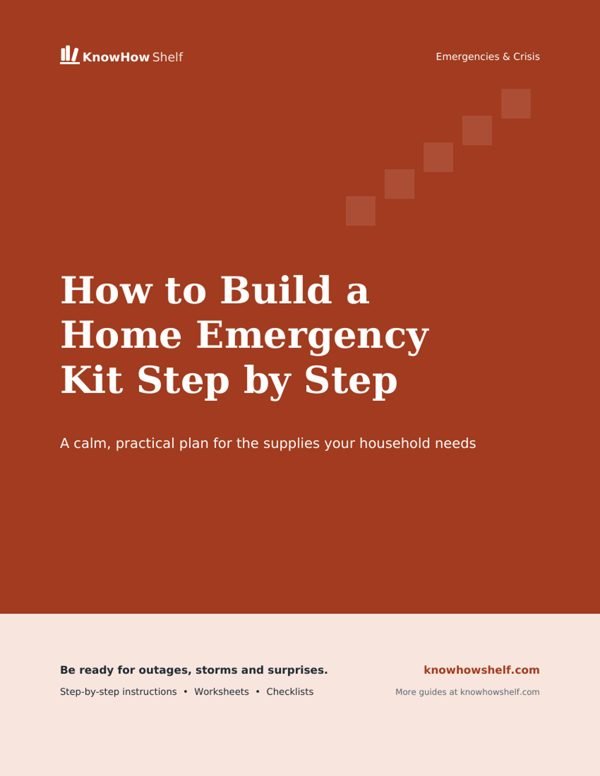
A calm, practical plan for the supplies your household needs
This guide is for anyone who has been meaning to put together an emergency kit but is not sure what to include or where to start. You will build a kit in stages, tailor it to the people and pets in your home, store it sensibly and keep it up to date without wasting money. In any emergency, call your local emergency number and follow the advice of official emergency services and your government, which always overrides this guide. General information, not professional advice.
Most emergencies are ordinary: a power cut that lasts a day, a storm that closes roads, a burst water main, or a flood warning that keeps you at home. In these situations shops may be shut or busy, card payments may not work and help may take time to reach everyone. A home emergency kit means you can look after yourself and your household for a few days without needing to go out.
Many emergency management agencies suggest being able to manage on your own for at least three days, often called a 72-hour kit. Some recommend longer, especially in areas prone to earthquakes, hurricanes or long winter outages. Check your national or local emergency management website for the period they recommend where you live, and treat that as your target.
A kit is not about expecting the worst. It is the same idea as keeping a spare tyre in the car: a small amount of effort now that turns a stressful situation into a manageable one.
Whatever your household looks like, the same basic categories come up again and again in official guidance. Think of these as the foundation, then add the personal items covered in the next section.
| Category | What to include | Notes |
|---|---|---|
| Water | Bottled water for drinking, cooking and basic hygiene | A common guideline is about 4 litres (1 gallon) per person per day; check your local advice |
| Food | Ready-to-eat items that need no cooking or refrigeration | Choose foods your household already eats and likes |
| Light | Torches or headlamps and spare batteries | Avoid relying on candles, which are a fire risk |
| Information | Battery or wind-up radio, printed contact list | Lets you hear official updates if phones and internet fail |
| Power | Charged power bank and charging cables | Recharge it every few months |
| First aid | A ready-made first-aid kit and its leaflet | Check contents against the label every year |
| Hygiene | Wet wipes, hand sanitiser, rubbish bags, toilet paper, sanitary products | Useful if water is off |
| Tools | Manual can opener, scissors, whistle, work gloves, duct tape | A whistle helps you signal for help |
| Warmth | Blankets or sleeping bags, warm layers, rain gear | Especially important in cold climates |
| Money and documents | Some cash in small notes, copies of key documents | Card machines and cash points may not work in an outage |
For food, good choices include tinned fish, beans and vegetables with ring-pull lids, peanut butter, crackers, cereal bars, dried fruit, nuts and long-life milk. Avoid very salty foods if water is limited, because they make you thirsty. Remember any special diets, allergies and baby food.
Plan for cooking without power by choosing foods that are safe to eat cold. If you want hot drinks or meals, a camping stove can only be used outdoors in a well-ventilated space, never indoors, in a garage or in a tent, so most households are better off with food that needs no heat at all. A vacuum flask filled with hot water before a forecast storm is a simple, safe way to have a warm drink later.
Get the rest: the full step-by-step guide plus a printable worksheet for $4.
$4
$4
$4
$4
$4
$4
$4
$4
$4
$4
$4
$4
$4
$4
$4
$4
$4
$4
$4