
$4.00 · 8-page PDF · instant download
Secure checkout by Stripe. Instant download after payment. All sales are final once the guide is downloaded.
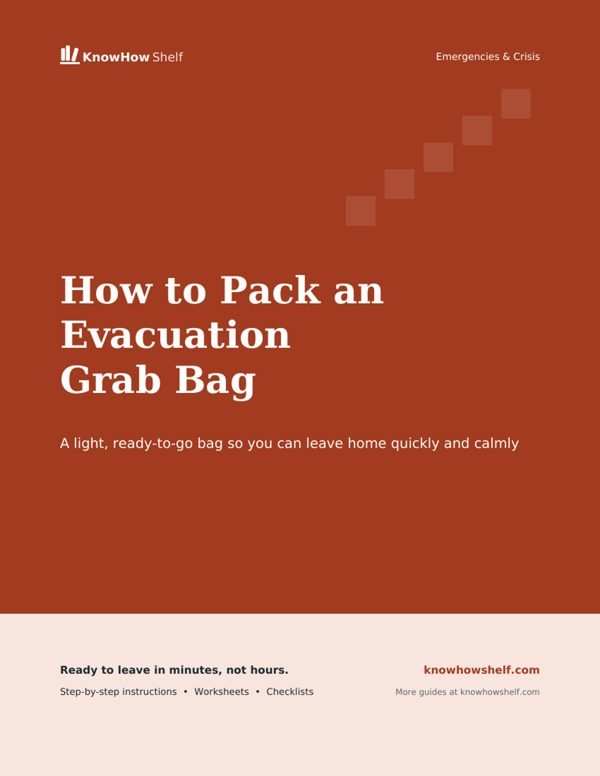
A light, ready-to-go bag so you can leave home quickly and calmly
This guide is for anyone who wants a bag packed and waiting in case they ever need to leave home in a hurry, whether because of a flood, wildfire, storm, gas leak or another emergency. You will learn what to pack, how to keep the bag light, how to adapt it for children, older relatives and pets, and how to keep it current. In any emergency, call your local emergency number and follow the instructions of official emergency services and your government, which always override this guide. If you are told to evacuate, go. General information, not professional advice.
A grab bag, sometimes called a go bag or evacuation bag, is a small, ready-packed bag you can pick up and carry out of the door within minutes. It is different from a home emergency kit. A home kit is designed to help you stay put for several days; a grab bag is designed to help you leave quickly and get through the first day or so somewhere else, such as a relative's home, a hotel or an official evacuation centre.
When an evacuation order comes, there is rarely time to think clearly. People forget their medicines, phone chargers and the documents they will need later for insurance or support. A bag packed in advance removes those decisions from a stressful moment, so you can focus on getting everyone out safely.
Evacuation warnings and orders are issued differently in different countries and regions. Some use mobile phone alerts, some use sirens, radio and television, and some use door-to-door warnings. Find out how warnings work where you live by checking your national or local emergency management website, and sign up for any official alert service they offer.
The best bag is one you can carry comfortably for a long walk while keeping your hands free. For most people that means a sturdy backpack. Wheeled cases are harder to manage on stairs, rough ground, flooded streets or in crowds.
You do not need a specialist or expensive bag. An old school backpack or a sturdy hiking daypack works perfectly well. What matters more is that the zips work, the straps are padded enough to wear for an hour, and there are one or two outer pockets for the things you will reach for most often. If a household member uses a wheelchair or walking frame, a bag that hangs securely from the chair or a small cross-body bag may suit them better than a backpack.
Think about who will carry what. Adults can carry most of the shared items such as water, the first-aid kit and the radio, while older children can carry their own clothes, snacks and comfort items. Younger children may manage only a tiny bag with a toy and a drink, and that is fine.
Get the rest: the full step-by-step guide plus a printable worksheet for $4.
$4
$4
$4
$4
$4
$4
$4
$4

$4
$4
$4
$4
$4
$4
$4
$4
$4
$4
$4