
$4.00 · 7-page PDF · instant download
Secure checkout by Stripe. Instant download after payment. All sales are final once the guide is downloaded.
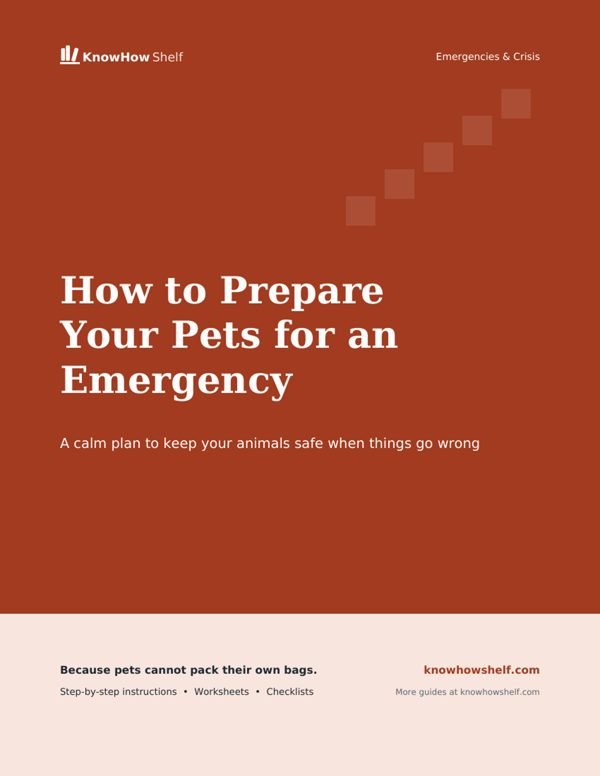
A calm plan to keep your animals safe when things go wrong
This guide is for pet owners who want to be sure their animals are looked after if a storm, fire, flood, power cut or evacuation happens. You will make sure your pet can be identified, pack a pet emergency kit, plan where your pet could stay and know how to keep them calm and safe during and after an emergency. In any emergency, call your local emergency number and follow the advice of official emergency services and your government, which always overrides this guide. Never put yourself or others in danger to rescue an animal. General information, not professional advice; ask your vet about your own pet.
In many emergencies, pets are the part of the household that gets forgotten until the last minute. People may be told to leave quickly, shelters may have rules about animals and frightened pets may hide or run away. Planning ahead means you will not have to make hard choices under pressure.
Emergency agencies in many countries advise that if it is not safe for you to stay, it is not safe for your pets either. Wherever possible, take your pets with you when you leave. That only works if you know where you can go, have what your pet needs ready and can move them safely.
This guide focuses on common household pets such as dogs, cats, rabbits, birds and small animals. If you keep horses, livestock or exotic species, the same principles apply, but you will need a more detailed plan. Your vet, breed society or local authority can usually point you to specific guidance.
Assistance animals, such as guide dogs, have special status in many countries, and emergency shelters are often required to accept them. The rules differ between places, so if you rely on an assistance animal, check your local guidance and keep any registration or identification documents in your emergency folder.
Pets that are separated from their owners during emergencies are far more likely to be reunited if they can be identified. Use more than one method so there is a backup if one fails.
If you move house or change your phone number, update the microchip database straight away. An out-of-date microchip is one of the most common reasons lost pets cannot be returned.
Ask your vet to scan the microchip at your next check-up to confirm it still works and that the number matches your records.
Get the rest: the full step-by-step guide plus a printable worksheet for $4.

$4
$4

$4

$4
$4

$4

$4
$4

$4

$4
$4

$4

$4

$4

$4
$4

$4
$4

$4