KnowHow Shelf
Home / Emergencies & Crisis
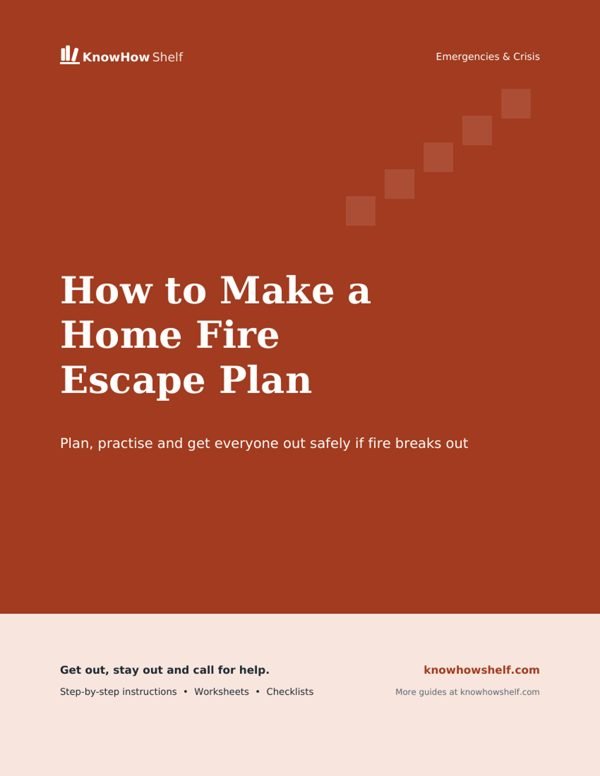
How to Make a Home Fire Escape Plan PDF guide cover

$4.00 · 7-page PDF · instant download

Secure checkout by Stripe. Instant download after payment. All sales are final once the guide is downloaded.

Emergencies & Crisis

How to Make a Home Fire Escape Plan

Plan, practise and get everyone out safely if fire breaks out

What's inside the full guide

  1. Why Every Home Needs an Escape Plan
  2. Start With Working Smoke Alarms
  3. Map Your Escape Routes
  4. What to Do if the Alarm Sounds
  5. If You Cannot Get Out
  6. Plan for Children, Older People and Pets
  7. Reduce the Risk and Keep the Plan Alive
  8. Our Home Fire Escape Plan (printable worksheet)

Free preview

This guide is for any household that wants a simple, practised plan for escaping a fire at home, whether you live in a house, a flat or a shared home. You will map your escape routes, choose a meeting point, plan for children, older people and pets, cut the risk of fire starting, and run a drill so the plan works when it matters. If there is a fire, get out, stay out and call your local emergency number, and always follow the advice of your fire service and official emergency services, which overrides this guide. General information, not professional advice.

Why Every Home Needs an Escape Plan

A fire at home can spread far faster than most people expect. Smoke is often the main danger: it can fill rooms and corridors quickly, make it very hard to see and breathe, and confuse people who have just woken up. Fire services in many countries stress that you may have only a few minutes to get out once a smoke alarm sounds.

That is why planning matters. When everyone already knows the way out, the backup route and the meeting point, they can act without stopping to think. A plan takes less than an hour to make and a few minutes to practise, and it is one of the most valuable safety steps any household can take.

Your plan has three simple aims, which many fire services sum up as get out, stay out, call for help. Everything in this guide supports those three actions.

Free help from your fire service: Many fire and rescue services offer free home fire safety visits or online checks, and some fit free smoke alarms for eligible households. Search your local fire service's website to see what is available where you live.

Start With Working Smoke Alarms

An escape plan depends on an early warning. Smoke alarms give you the extra minutes you need, especially at night, when you would not notice smoke while asleep. Building rules on alarms vary by country and by type of home, so check your local fire service guidance, but the basics are similar everywhere.

  • Fit at least one smoke alarm on every level of your home, including hallways and landings.
  • Consider alarms in or near bedrooms and in living rooms, and a heat alarm in the kitchen, where smoke alarms can be set off by cooking.
  • Interlinked alarms, which all sound when one detects smoke, are a good choice in larger homes.
  • Test every alarm once a month by pressing the test button.
  • Replace batteries as the manufacturer recommends, or choose alarms with long-life sealed batteries.
  • Replace the whole alarm when it reaches the end of its stated life, often around ten years.
  • Fit a carbon monoxide alarm in rooms with fuel-burning appliances such as boilers, fires and stoves.

If anyone in your home is deaf or hard of hearing, ask your fire service about alarms with flashing lights or vibrating pads that go under the pillow.

Get the rest: the full step-by-step guide plus a printable worksheet for $4.
More Emergencies & Crisis guides

How to Build a Home Emergency Kit Step by Step

$4

How to Get Through a Power Outage Safely at Home

$4

How to Make a Household Emergency Plan That Everyone Knows

$4

How to Cope When You Suddenly Lose Your Job

$4

How to Recover After Your Home Floods

$4

How to Keep Your Home Cool in a Heatwave Without Air Conditioning

$4

How to Pack an Evacuation Grab Bag

$4

How to Handle It When You Can't Pay Rent This Month

$4

How to Make an Insurance Claim After a Flood or Fire

$4

How to Store Emergency Water for Your Household

$4

How to Prepare Your Home Before a Big Storm

$4

How to Stay Safe if You're Stranded in a Car in Snow

$4

How to Protect Yourself and Your Home From Wildfire Smoke

$4

How to Build an Emergency Fund When Money Is Tight

$4

How to Prepare for an Earthquake at Home

$4

How to Keep Important Documents Safe for Emergencies

$4

How to Make a Family Emergency Communication Plan

$4

How to Keep Food Safe When the Power Goes Out

$4

How to Prepare Your Pets for an Emergency

$4