
$4.00 · 8-page PDF · instant download
Secure checkout by Stripe. Instant download after payment. All sales are final once the guide is downloaded.
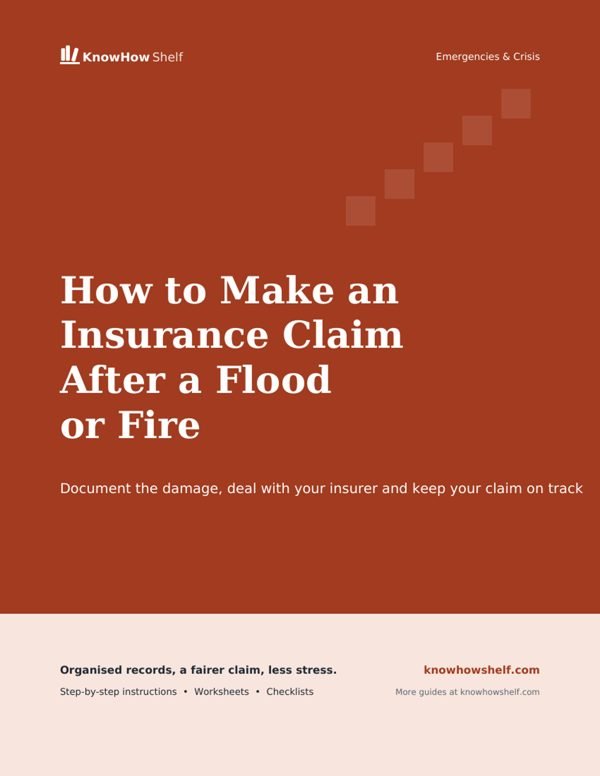
Document the damage, deal with your insurer and keep your claim on track
This guide is for homeowners and renters whose home or belongings have been damaged by flood or fire and who need to make an insurance claim. You will learn what to do first, how to record the damage, how to deal with your insurer and loss adjuster, and what to do if you disagree with an offer. Insurance rules, policy terms and complaint routes vary by country and by insurer, so always read your own policy and check your national insurance regulator or ombudsman for local rules. In an emergency, call your local emergency number and follow official emergency services advice, which always comes before your claim. General information, not professional advice.
Nothing about an insurance claim is more important than the safety of the people in your home. Do not go back into a damaged property until the fire service, emergency services or local authority says it is safe. Fire can weaken floors and roofs, and floodwater can hide hazards and be contaminated. Electricity and water together are dangerous: do not touch switches, sockets or appliances that have been wet, and have a qualified electrician check the system before it is used.
If you need to dry out or heat the home while you wait, never run a generator, gas heater, barbecue or other fuel-burning appliance indoors, in a garage or near open windows. They produce carbon monoxide, which cannot be seen or smelled and can kill. A generator must only be used outdoors, well away from the building.
Once everyone is safe, the next priority is to tell your insurer. Most policies require you to report damage as soon as reasonably possible, and many insurers can arrange emergency help such as temporary accommodation, drying equipment or a locksmith.
Find your policy documents, or log into your insurer's website or app. Look for the claims phone number or online claim form. If your documents were lost in the fire or flood, your insurer can find your policy from your name and address, and your bank statement will show who you pay.
If you rent, your landlord's insurance usually covers the building, while your own contents insurance, if you have it, covers your belongings. Tell your landlord or letting agent about the damage straight away and in writing, and contact your own insurer for your possessions. Who is responsible for what depends on your tenancy agreement and local law, so check with a tenant advice service if you are unsure.
Get the rest: the full step-by-step guide plus a printable worksheet for $4.
$4
$4
$4
$4
$4
$4
$4
$4
$4
$4
$4
$4
$4
$4
$4
$4
$4

$4
$4