
$4.00 · 7-page PDF · instant download
Secure checkout by Stripe. Instant download after payment. All sales are final once the guide is downloaded.
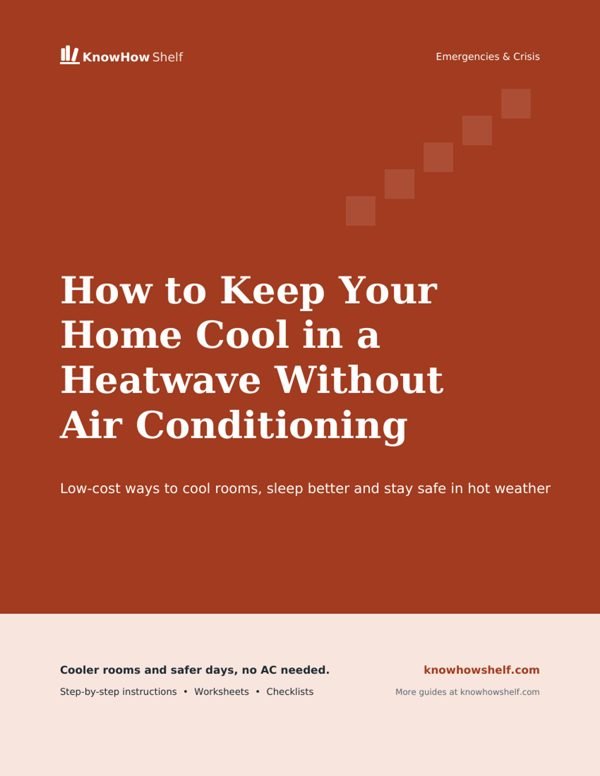
Low-cost ways to cool rooms, sleep better and stay safe in hot weather
This guide is for renters, homeowners and anyone without air conditioning who dreads the next spell of hot weather. You will learn how heat gets into a home, how to keep it out during the day, how to flush it out at night and how to look after the people most at risk. In an emergency, including signs of serious heat illness, call your local emergency number and follow official emergency services and government heat advice, which always overrides this guide. General information, not professional advice.
Before buying anything, it helps to understand where the heat is coming from. In most homes, three things do the damage: sunlight streaming through windows, warm outdoor air drifting in, and heat produced inside by people, cooking and appliances. Walls and roofs also soak up heat during the day and release it slowly into the evening, which is why a top-floor flat can stay hot long after sunset.
The basic strategy is simple. During the hottest part of the day you block heat from getting in. When the air outside becomes cooler than the air inside, usually late evening to early morning, you flush the stored heat out. And all day long you reduce the heat you create indoors. Every tip in this guide fits into one of those three jobs.
Windows are usually the biggest source of unwanted heat. Sun shining through glass can warm a room quickly, so shading is the single most effective free action you can take. Shading on the outside of the window works best because it stops the heat before it reaches the glass, but indoor shading still helps a great deal.
Plants and outdoor surfaces matter too. If you have a balcony, patio or garden, a parasol, a shade sail or potted plants placed in front of a sunny window can cut the amount of direct sun hitting the glass. Watering a paved area or patio in the early evening can help it cool down faster, so less heat radiates towards the house overnight. Follow any local water-use restrictions, which are common during hot, dry spells.
Pay attention to where you spend your time. Ground-floor rooms and those on the shaded side of the building are often several degrees cooler. Moving a work desk, a child's nap or an older relative's chair into the coolest room for a few days costs nothing.
Get the rest: the full step-by-step guide plus a printable worksheet for $4.

$4
$4

$4

$4

$4

$4
$4

$4

$4

$4

$4

$4
$4

$4
$4

$4

$4

$4

$4