
$4.00 · 7-page PDF · instant download
Secure checkout by Stripe. Instant download after payment. All sales are final once the guide is downloaded.
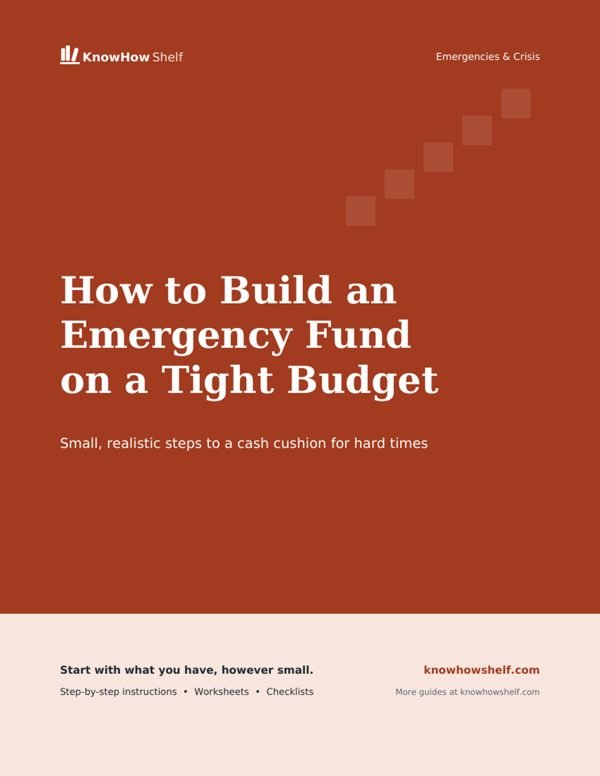
Small, realistic steps to a cash cushion for hard times
This guide is for anyone who knows they should have savings for emergencies but feels there is never anything left at the end of the month. You will set a realistic first target, find small amounts to save, keep the money safe and separate, and know what to do when you need to use it. If you face a physical emergency, call your local emergency number and follow official emergency services and government advice, which always overrides this guide. General information, not professional advice.
An emergency fund is money set aside only for unexpected, necessary costs: a broken boiler, a car repair you need to get to work, a sudden drop in hours, or the extra costs that come with a storm, flood or power cut. Without one, these costs often end up on a credit card, an overdraft or a high-cost loan, which can turn a one-off problem into months of repayments.
Common advice is to save three to six months of essential costs. That target can feel impossible on a low income, and it can put people off starting at all. A much smaller first goal is far more useful. Even a modest sum can cover many everyday emergencies and give you breathing space to think before you borrow.
The aim of this guide is progress, not perfection. Saving a little, regularly, builds the habit, and the habit is what grows the fund over time.
An emergency fund is also part of being ready for wider emergencies. After a storm, flood or long power cut, households often face costs that nobody budgets for: spoiled food, temporary travel, a hotel night, replacement clothing or an insurance excess. Having even a little money set aside means you can deal with those costs while you wait for any official support or insurance payments, which can take time.
Work in stages. Each stage gives you a win to celebrate and a reason to keep going. Pick amounts that make sense for your own costs and currency.
| Stage | Typical goal | What it can cover |
|---|---|---|
| Starter | A small fixed sum you can reach in a few weeks | A prescription charge, a taxi in an emergency, a replacement phone charger |
| Stage one | Roughly the cost of one common repair | A car repair, a washing machine fix, an urgent dental visit |
| Stage two | About one month of essential bills | Rent or mortgage, utilities and food if income stops briefly |
| Stage three | Three or more months of essential bills | A longer job loss, illness or a major household emergency |
To find your essential monthly costs, add up only what you must pay: housing, energy, water, basic food, transport to work, insurance, minimum debt payments and phone. Leave out takeaways, subscriptions and other things you could pause in a crisis. This number is usually smaller than your total spending, which makes the later stages feel more reachable.
Write your stage targets down and put them somewhere you will see them, such as on the fridge or as a note in your phone. Many people find it motivating to draw a simple bar or thermometer and colour it in as the balance grows. If your income changes from month to month, base your targets on a lower-than-average month so they stay realistic.
Get the rest: the full step-by-step guide plus a printable worksheet for $4.
$4
$4
$4
$4

$4

$4

$4
$4
$4

$4
$4
$4

$4

$4
$4
$4
$4
$4
$4