
$4.00 · 7-page PDF · instant download
Secure checkout by Stripe. Instant download after payment. All sales are final once the guide is downloaded.
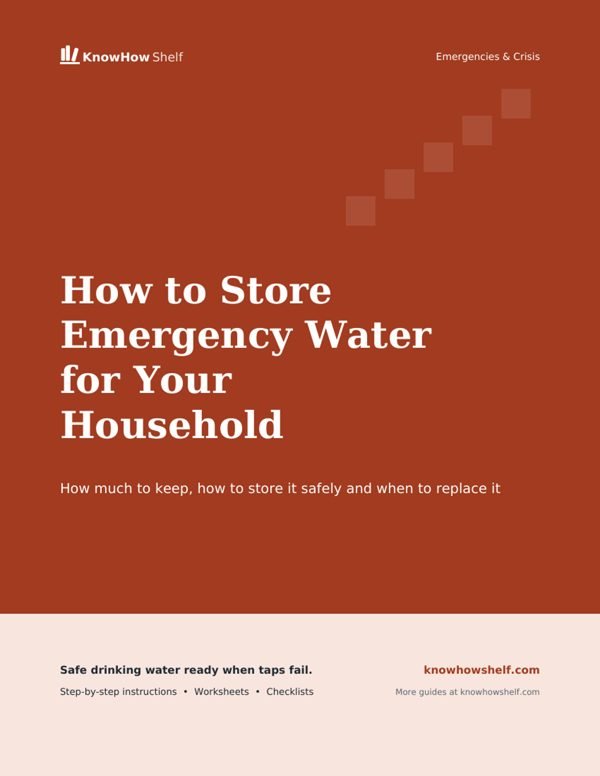
How much to keep, how to store it safely and when to replace it
This guide is for any household that wants a sensible supply of drinking water in case the taps stop working or the supply becomes unsafe. You will work out how much water you need, choose safe ways to store it, keep it fresh and know what to do when your water company issues a warning. In any emergency, call your local emergency number and follow official emergency services, government and water supplier advice, which always overrides this guide. General information, not professional advice.
Most of us never think about water until it stops. Yet supplies can be interrupted by burst mains, frozen pipes, floods, storms, droughts, power cuts that affect pumping stations, or contamination that makes tap water unsafe to drink for a while. In these situations bottled water in shops can sell out quickly, and emergency water stations, if they are set up, may involve queues and carrying heavy containers.
A modest store of drinking water at home means you can keep drinking, preparing food and washing hands safely for a few days without needing to go anywhere. It is one of the simplest and most important parts of being prepared, and it costs very little.
Water matters more than food in a short emergency. People can manage for a while on simple meals, but going without enough water quickly affects concentration, energy and health, especially for children, older people and anyone who is unwell.
Stored water also gives you choices. If the supply is off for an afternoon, you can carry on as normal. If it is off for several days, you have time to find out where official water points are, check on neighbours and wait for supplies to arrive, rather than joining a rush to the shops at the first sign of trouble.
A widely used guideline from emergency agencies is about 4 litres (1 gallon) per person per day, covering drinking plus a small amount for food preparation and hygiene. Many agencies recommend storing enough for at least three days, and some suggest two weeks if you can. Check your national or local emergency management website for the amount and period they recommend where you live.
Some people need more. Plan extra for hot climates or heatwaves, for anyone who is pregnant or breastfeeding, for people who are ill, and for children, who can become dehydrated more quickly. Pets need water too; a rough allowance can be found from your vet or a reputable animal welfare organisation.
| Household | 3 days | 7 days | 14 days |
|---|---|---|---|
| 1 person | 12 litres | 28 litres | 56 litres |
| 2 people | 24 litres | 56 litres | 112 litres |
| 3 people | 36 litres | 84 litres | 168 litres |
| 4 people | 48 litres | 112 litres | 224 litres |
| 5 people | 60 litres | 140 litres | 280 litres |
These figures use the 4 litre guideline and are a starting point, not a rule. If space is tight, start with three days and build up. Even a smaller store is much better than none.
Get the rest: the full step-by-step guide plus a printable worksheet for $4.
$4
$4
$4
$4
$4

$4
$4
$4
$4

$4
$4
$4
$4
$4
$4
$4
$4
$4
$4